Shop Titans: Crafting Tycoon
Kabam Games, Inc.Simulation
4.213.47K Reviews
- Version
- Varies With Device
- Installs
- 5.00M
- Age Rating
- Teen
Screenshots
Our Review of Shop Titans: Crafting Tycoon
 Analysis by Appyee
I expected a light fantasy shop game, but what stood out to me was how its different jobs—crafting, selling, outfitting adventurers and arranging a store—support one another. The result is less like a single-minded business simulator and more like tending a small workshop whose customers keep bringing the wider world to its door. I found that appealing, especially when I wanted a game I could check in on rather than one that demanded my full attention every minute.
A shopkeeper’s pace, not a constant rush
Shop Titans: Crafting Tycoon is a free simulation game from Kabam Games, Inc., released on June 18, 2019. It has a Teen content rating, a 4.2 average from around 181,000 ratings, and over 5 million installs. Those figures suggest a sizeable audience, but they don’t tell you whether its particular rhythm will suit you: this is best approached as a gradually growing routine, not a quick campaign with a clear finish line.
That routine makes it easy to fit into an ordinary day. I might open the game during a short break, check what I can craft, decide what the shop needs, and leave the longer-term plans for later. A more satisfying session comes when I have enough time to compare those choices and think ahead. If you want an action game that rewards uninterrupted play, this will feel slow; if you enjoy making a few connected decisions and returning to see how they worked out, its measured pace is part of the appeal.
Fantasy details that make the work feel lived in
The setting gives the business side a useful sense of purpose. Adventurers need equipment, and their journeys connect the shop to the dangerous places beyond it. That simple relationship helps the fantasy theme feel more coherent than a collection of decorative swords and potions: crafting serves a customer, and the customer’s adventures feed back into the shopkeeper’s plans.
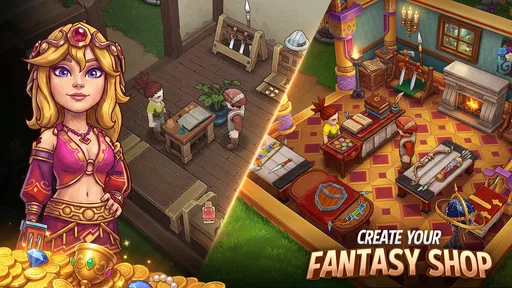
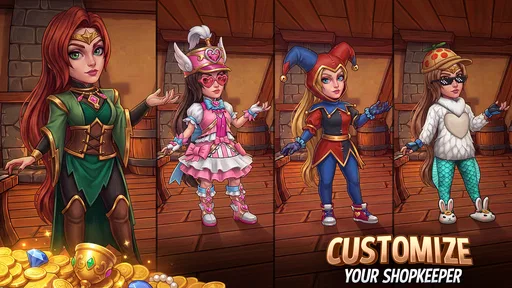
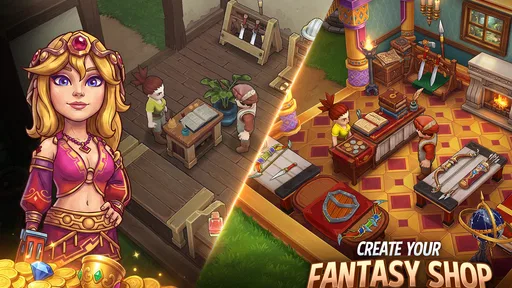
The visual style also suits that modest, welcoming scale. I like that the store can feel personal rather than just an interface for production choices. Rearranging shelves and displays gives the business a visual identity, even though decoration does not replace the planning behind what to make and sell. If you enjoy expressing a little taste through a game’s space, that layer makes each visit feel more like returning to your own shop.
Sound, interruptions, and a useful way to play
The overall mood is cheerful and storybook-like, which keeps routine management from feeling too stern. I would think of the sound and presentation as support for the activity rather than the main event: the pleasure comes from seeing a plan take shape, not from treating the game as a dramatic adventure. That distinction matters if you are choosing between a relaxed management game and a fantasy title built around intense battles.
A practical approach is to give each visit a small purpose. I might check available crafting choices first, then look at the shop and decide what to sell or adjust, rather than tapping through every screen without a plan. When I have more time, I can turn that quick check-in into a longer session focused on improving the business. The trade-off is that a game designed around gradual progress can make brief visits feel repetitive if I return without a goal.
Where its systems meet—and where they can snag
I find the appeal of this shopkeeper’s routine comes from how crafting, selling, adventuring and decorating can pull in different directions without becoming entirely separate games. In this section, I’d focus on how to give those systems a clear purpose during a session—and on the moments when their competing demands can make progress feel scattered. A small plan helps, but it also matters to know which activities you actually enjoy.
Crafting, trade, and the value of planning
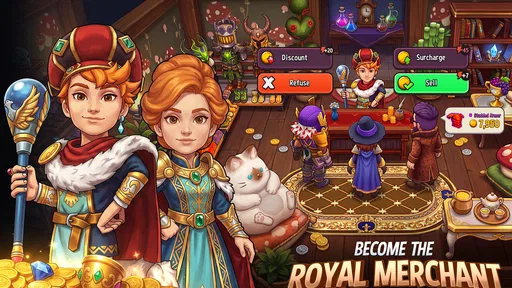
Crafting and selling work best when I treat them as linked decisions. Making an item is not automatically worthwhile just because I have the materials; I also need to consider whether it fits what I want the shop to offer. The player market adds another layer, since other players are part of the trading picture and prices can change. Rather than assuming there is one always-correct sale, I find it more sensible to compare the available options and accept that timing and convenience can matter as much as a perfect price.
One useful habit is to avoid filling every decision with the same kind of item. Keeping an eye on what I can craft, what I am prepared to sell, and what might help later makes the shop feel less like a button-pressing loop. It also helps to treat the market as an opportunity rather than a guaranteed shortcut: watching prices requires attention, and anyone who dislikes that uncertainty may prefer to focus on crafting and shop management instead.
Adventurers make materials feel earned
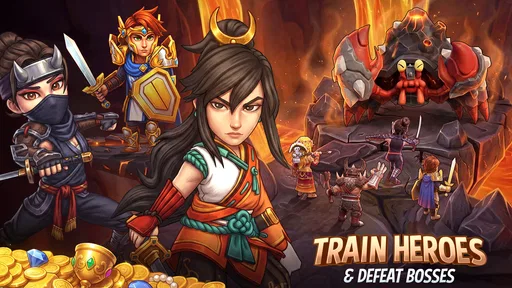
Sending heroes into dungeons gives the business a reason to look beyond its counters. Recruiting and improving a team, equipping its members, and seeking materials tie the RPG element back to the workshop. I like that this creates a planning question: gear can support the people gathering what the shop needs, while crafted goods give me something concrete to work toward. It is a satisfying loop when I want a little more than decorating and selling.
There is a trade-off, though. The game asks me to care about several connected activities rather than letting one system carry the whole experience. Someone who only wants to decorate may find the hero-management side distracting, while a player looking for deep, hands-on combat may find the dungeon element less central than expected. I would choose this for the combination, not for any one part in isolation.
Guilds, spending, and choosing your level of commitment
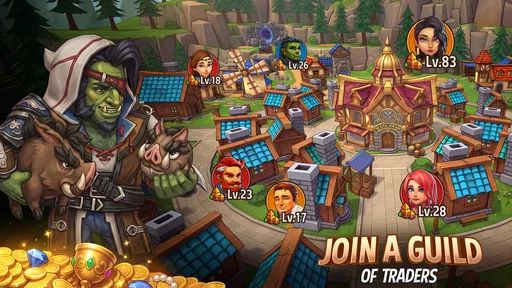
Guilds give the shop a social dimension through chat, events and trading. They can make progress feel less solitary, and they offer a reason to compare plans with other people instead of treating the market as a purely private tool. At the same time, social play is a preference, not a requirement for enjoying the core fantasy of running a store; I would not join a group just because the option exists if I wanted a quieter solo routine.
The game is free to start, with optional in-app purchases ranging from $0.99 to $99.99 per item. I would go in with a spending limit in mind, especially if gradual progress makes me impatient to move faster. Paying is not the right answer to every slowdown, and the most enjoyable parts for me come from making choices with the shop, team and stock I have rather than trying to rush through every step. If you prefer a game with no optional purchases at all, that is a fair reason to look elsewhere.
Who will enjoy running this particular shop?
I would recommend it to someone who likes steady progress, light business decisions and a fantasy setting that connects crafting to adventuring. It can also suit a player who wants a familiar game to revisit in short sessions, provided that routine check-ins feel satisfying rather than like chores. The shop customization is a nice reason to linger, while crafting and trading give more goal-focused players something to think through.
I would skip it if I wanted a tightly directed story, constant action, or a pure decorating game with little resource planning. It is also a poor match for anyone who finds fluctuating market prices or several parallel systems stressful. Compared with a conventional shop-management game, its adventurer and guild elements broaden the loop; compared with a conventional RPG, running the store is central rather than a side activity. That middle ground is its identity, but it also means it may not go as deep as a specialist game in either direction.
Small decisions that make a session smoother
When I have only a minute, I try not to turn the visit into a hunt for something to tap. Checking what I can make and choosing one clear shop task gives the session a stopping point. With more time, I can look at the market and think about whether selling now is worth it, then consider how my adventurers’ equipment and material needs fit into the next plan. This is a more useful way to approach the game than expecting every screen to offer an urgent objective.
For a realistic routine, imagine opening it on a commute break: I can review the shop, make a manageable choice, and close it without needing to finish a long quest or complete a full business overhaul. In the evening, I can spend longer arranging the store or thinking through a crafting and trading plan. That flexibility is a strength, but it depends on enjoying incremental management; it does not turn the game into a fast, self-contained session every time.
What to expect before installing
If you are wondering whether you can enjoy it without spending, the free-to-play entry point makes it possible to try the basic experience before deciding whether optional purchases fit your habits. I would treat those purchases as a choice, not a prerequisite, and avoid buying anything simply because I want to eliminate the game’s gradual pace. If you are wondering whether the social side is essential, guilds add interaction, but the appeal of crafting, stocking and customizing a shop remains the main reason I would try it.
Another useful expectation is that “simulation” here does not mean a realistic retail-management tool. It is a fantasy business game, and the pleasure comes from connecting shopkeeping with crafted gear and adventurers. Nor would I pick it solely for decorating: store design is a personal touch within a wider set of systems. Knowing which part interests you most can help you decide whether the mix feels inviting or overly spread out.
Craft, Trade, and Conquer
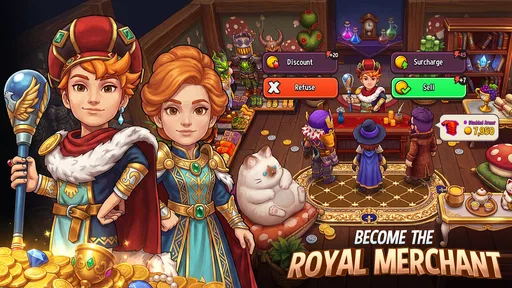
The premise of Shop Titans: Crafting Tycoon is pretty straightforward: you’re a shopkeeper in a bustling fantasy town, tasked with crafting and selling items to adventurers. Sounds simple, right? But don’t be fooled. There’s a lot more to it than meets the eye.
The Art of Crafting
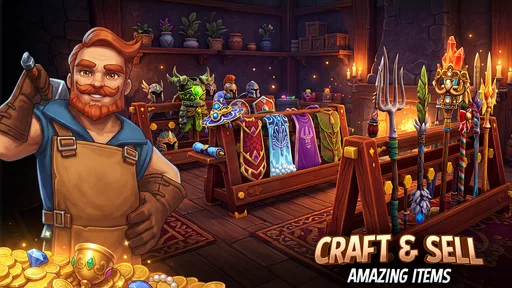
First off, the crafting system. You start with basic items like swords and shields, but as you progress, you unlock new blueprints and materials. It’s kind of like being a blacksmith, tailor, and alchemist all rolled into one. The game gives you a real sense of progression as you level up your crafting skills. You’ll find yourself eagerly waiting for that next blueprint to see what cool new item you can create.
Trading Adventures
Now, crafting is just one part of the game. There’s also a big focus on trading. You can sell your wares to NPC adventurers or even other players. The market is dynamic, and prices fluctuate, so there’s a bit of strategy involved in knowing when to sell your goods. It’s like playing the stock market, but with swords and potions.
Building a Team
Speaking of adventurers, you’ll also recruit a team to venture into dungeons and gather rare materials for you. This aspect of the game brings in a fun RPG element. You get to upgrade your heroes, equip them with gear, and send them off to defeat monsters. It adds a layer of excitement and makes the crafting process feel more rewarding.
Design Your Dream Shop
One of my favorite parts of Shop Titans is the ability to customize your shop. You can decorate it however you like, and there’s something oddly satisfying about arranging your shelves and displays just so. It’s like having your own little corner of the world where everything is exactly how you want it.
Graphics and Gameplay
The graphics in Shop Titans are vibrant and charming. The characters are well-designed, and the animations are smooth. It’s clear that a lot of care went into creating a visually appealing game. The controls are intuitive, making it easy to navigate through the various menus and options. Whether you’re a seasoned gamer or just someone looking for a fun way to pass the time, you’ll find the gameplay engaging and accessible.
Community and Social Interaction
Another aspect worth mentioning is the community. Shop Titans encourages social interaction through guilds. Joining a guild allows you to chat with other players, participate in guild events, and even trade items. It adds a social element that can make the game even more enjoyable.
Final Thoughts
So, is Shop Titans: Crafting Tycoon worth the download? In my opinion, absolutely. It’s a game that combines strategy, creativity, and social interaction in a way that keeps you coming back for more. Whether you’re crafting the perfect item, strategizing your next sale, or sending your heroes off on a quest, there’s always something to do. Plus, it’s free to play, so there’s really no reason not to give it a shot.
If you’re ready to dive into the world of crafting and commerce, Shop Titans is waiting for you. Just be prepared to lose track of time as you immerse yourself in this delightful little universe.
Verdict
Strengths of Shop Titans: Crafting Tycoon
- Engaging crafting mechanics.
- Rich, colorful graphics.
- Frequent updates and events.
- Detailed customization options.
- Collaborative guild features.
Limitations of Shop Titans: Crafting Tycoon
- In-app purchases can be pricey.
- Requires constant internet connection.
- Progression can be slow.
- Limited offline play features.
- Occasional repetitive tasks.
Other Releases by Kabam Games, Inc.
View All
Marvel Contest of Champions
Action4.2
Similar Picks in This Category
View All
Truckers of Europe 3
Wanda Software4.3

Town Building Life Simulator
XGame Global4.2

Fidget Toys Trading・Pop It 3D
Freeplay Inc4.7

Sculpt People
CrazyLabs LTD4.4

Scary Teacher 3D
Z & K Games4.2

Hair Tattoo: Barber Shop Game
CASUAL AZUR GAMES4.3
Frequently Asked Questions
What is the main objective of Shop Titans: Crafting Tycoon?
Shop Titans: Crafting Tycoon is a simulation game where you manage and grow your own fantasy shop. The main objective is to craft items, fulfill orders, and optimize your shop to attract heroes and adventurers. As you progress, you can expand your business, hire workers, and collaborate with friends to enhance your shop's success.
Is Shop Titans: Crafting Tycoon free to play?
Yes, Shop Titans: Crafting Tycoon is free to download and play on both Android and iOS devices. However, it does offer in-app purchases for various items and enhancements that can help accelerate your progress or customize your experience. Players can choose to make purchases, but they are not essential to enjoy the game.
What are the key features of Shop Titans: Crafting Tycoon?
The game features a robust crafting system, where you can create a wide range of items for your shop. You can also manage your workforce, decorate your shop, and interact with heroes who will embark on quests. The multiplayer aspect allows players to join guilds and collaborate with others to complete challenges and earn rewards.
Can I play Shop Titans: Crafting Tycoon offline?
No, Shop Titans: Crafting Tycoon requires an internet connection to play. This is necessary to access multiplayer features, updates, and in-game events. The online connectivity ensures that players can interact with friends, participate in guild activities, and keep their game data synced across devices.
How does the multiplayer aspect work in Shop Titans: Crafting Tycoon?
In Shop Titans: Crafting Tycoon, players can join guilds to collaborate on quests and challenges. Guild members can trade items, share strategies, and work together to complete tasks that yield special rewards. The multiplayer feature enhances social interaction, allowing players to team up with friends and other online players to achieve common goals.
Play our best games!


